Playgrounds
Rubber Playground Surface: Design and Verification Guide
Playground surfacing must be designed with the equipment and verified for the specific project; the material alone proves neither safety nor compliance.
Équipe Aménagement Lalonde · · 11 min read
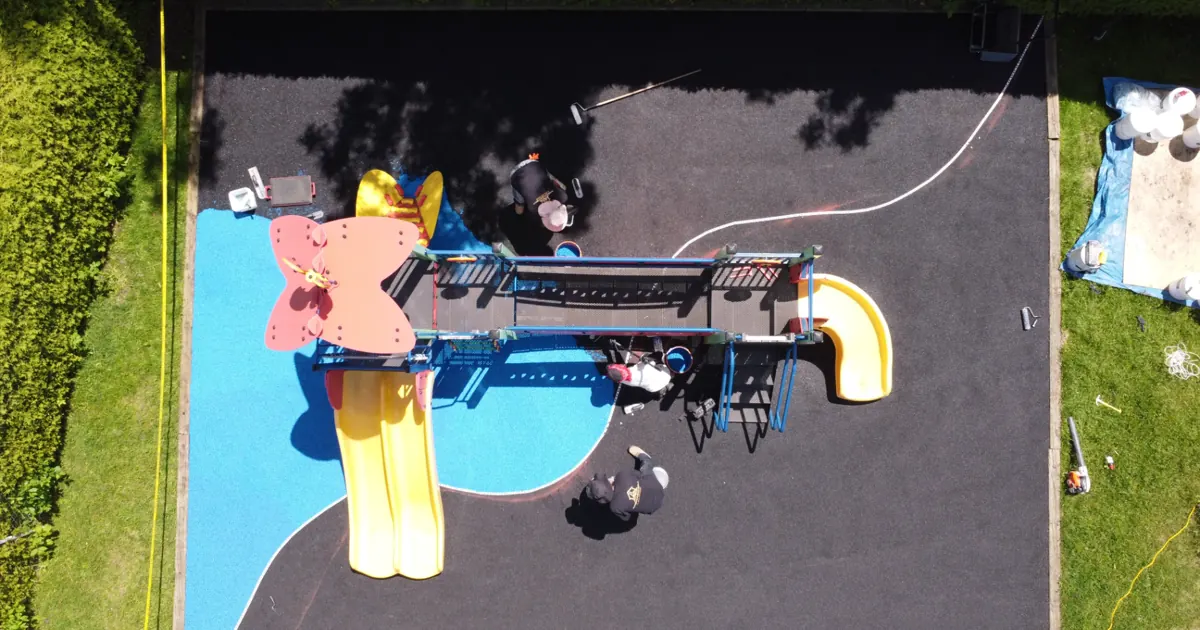
A rubber playground surface must be designed around the equipment, fall heights, use zones, accessible routes, drainage and maintenance conditions at the site. Choosing rubber or copying a common thickness does not establish that an installation is safe or compliant.
Canadian project teams need to confirm applicable regulations, standards and contract requirements with the authority responsible for the project. Composition, thickness, support, workmanship, verification and care affect actual performance, including after freezing, moisture, wear or repair.
Design the surface around the equipment
Play structures have different platforms, movement patterns and potential falls. Equipment data, contract documents and the responsible authority should guide the project’s fall heights and use zones before the surfacing system is specified.
A surface selected separately from swings, slides, climbers and ground-level components can be the wrong depth or fail to cover the necessary area. The surfacing installer, equipment supplier, designer and owner need coordinated documents.
- Obtain plans and manufacturer data for every play component
- Map use zones and required clearances
- Establish project-specific fall heights
- Have the responsible professionals review the design
Impact attenuation is measured, not assumed
ASTM F1292 describes an impact-attenuation test method, including critical fall height and installed-surface performance. It addresses a defined risk, does not promise that injuries cannot occur and does not, by itself, establish every requirement for a Canadian project.
Specified depth should correspond to the tested system and the project’s selected fall height rather than being copied from another site. Moisture, freezing, ageing, compaction, contamination, thickness loss and maintenance can change performance over time.
- Request test data for the exact proposed system
- Connect system depth to the project fall height
- Plan the post-installation tests or inspections selected for the project
- Avoid claims that a surface prevents all injuries
Build accessibility into the layout
Accessibility Standards Canada’s draft CAN-ASC-2.1 describes routes that connect play elements and surfaces that are firm, stable and slip resistant for travel. It offers planning guidance rather than, by itself, certifying compliance. A material that begins in suitable condition can become difficult to use if edges lift, slopes are poorly built or drainage causes deformation.
Accessibility extends beyond the area under the equipment. It includes arrival from parking or the sidewalk, entrances, transfer spaces, rest areas and continuity between activities. Consulting users and accessibility specialists can reveal barriers that a finish plan misses.
- Connect entrances and play elements with a continuous route
- Provide turning, transfer and rest spaces
- Control vertical changes at material transitions
- Assess firmness, stability and slopes after installation
Base, drainage and installation details
The surfacing system relies on a base that manages loads, water and seasonal cycles. Grades, drains, curbs and transitions should prevent trapped water and loss of route stability. A weak foundation cannot be corrected by a brighter finish layer.
Mixing, working times and weather affect poured installation. Terminations around posts, drains and adjoining materials require precise details. Recording batches, thicknesses and site conditions helps document what was actually installed.
- Design grades and support before the rubber layers
- Coordinate borders, posts, drains and level changes
- Check layer depths during the work
- Record products, batches and application conditions
Inspection, cleaning and repairs
Health Canada recommends checking play equipment often and repairing worn, loose or broken parts. The same routine should include the surface: debris, glass, contamination, lifted edges, wear, settlement, open seams and blocked drainage all deserve attention.
A local patch needs to restore the required functions and receive any necessary verification. A similar colour does not prove that composition, thickness or impact attenuation has been restored. Owners should maintain inspection, repair and test records.
- Set an inspection frequency for use level and season
- Remove foreign objects and contaminants promptly
- Close an area when its condition requires risk assessment
- Document every repair and the follow-up verification
Project records and clear responsibilities
A strong project file includes equipment plans, fall heights, the selected standard or test method and edition, accessibility requirements, system data, base preparation, installation reports and verification results. A backyard, childcare centre, school and municipal park may have different obligations.
Before award, the owner should define who designs, supplies data, inspects, tests and maintains the installation. Aménagement Lalonde can contribute to a surfacing system, but no web page or generic quotation replaces the regulatory and professional review required for a specific playground.
- Identify the authority having jurisdiction and contract standards
- Assign design, inspection and testing responsibilities
- Require closeout documents
- Train the team responsible for maintenance and closures
Frequently asked questions
Does rubber automatically make a playground compliant?
No. Compliance can depend on equipment, fall heights, use zones, system composition, thickness, accessibility, installation and the selected verification plan. Any compliance determination is project-specific and belongs with the responsible authorities and professionals.
How is playground rubber thickness determined?
It is specified from the project fall height, tested system, applicable requirements and base design. A depth used on another playground is not a valid specification by itself.
Is poured rubber accessible?
It can support a firm, stable and continuous route when properly designed, installed and maintained. Site accessibility also includes slopes, widths, transitions, entrances, transfer spaces and connections to equipment.
Should the surface be tested after installation?
Whether testing or inspection is needed depends on the selected standard or method, contract, authority and use. For public or institutional playgrounds, the verification plan should be defined before construction and documented at completion.