Outdoor Surfaces
Outdoor Rubber Flooring: Choosing by Application
Outdoor rubber is not one universal product. Compare applications, layered systems, site constraints and alternative materials before specifying a finish.
Équipe Aménagement Lalonde · · 9 min read
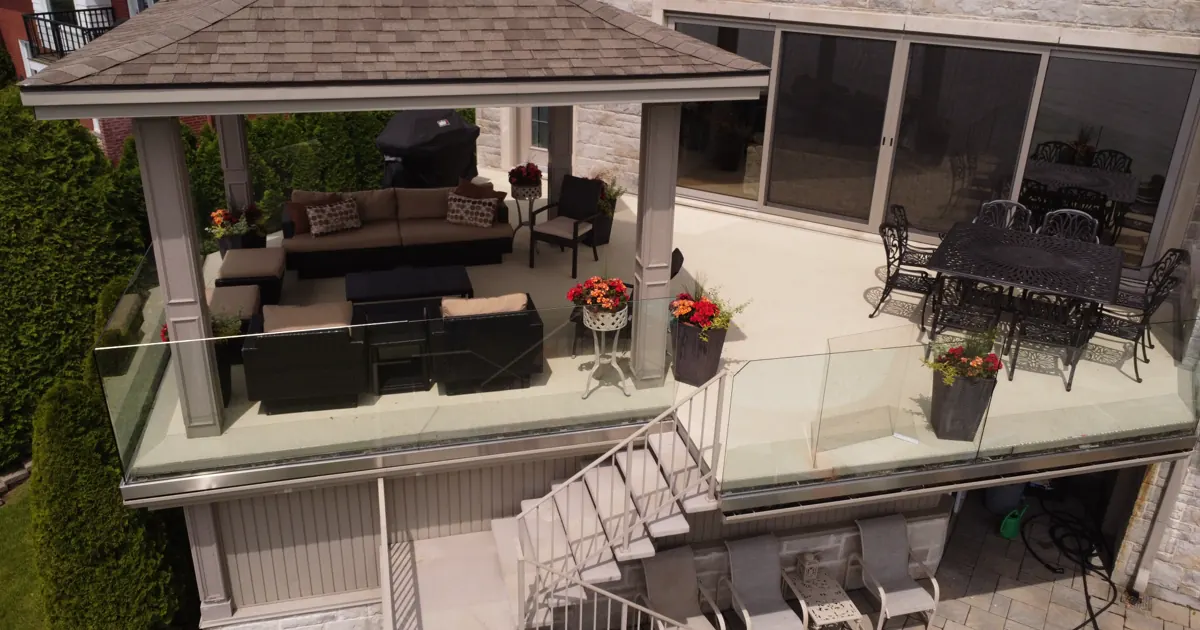
Outdoor rubber flooring describes several systems whose composition and design need to match the patio, path, pool deck, driveway or playground in question. The substrate, drainage, thickness, installation, exposure and maintenance influence the outcome more than a material label by itself.
A useful comparison separates appearance from function. A comfortable pedestrian finish may be unsuitable for turning tires, while a vehicle-rated build-up does not automatically become a tested playground surface.
The main types of outdoor rubber systems
Poured systems generally combine granules with a binder over a prepared base. Depending on the project, a coloured EPDM finish may be installed with an SBR layer or another build-up. Mats, modular tiles and factory-made products are a separate category with their own seams and installation requirements.
Even two poured systems can differ in granule size, binder, thickness, texture and preparation. A proposal should describe the full assembly instead of relying on the terms “EPDM” or “recycled rubber” alone.
- Poured systems for continuous shapes with no obvious tile seams
- Tiles or mats when modular replacement is a design priority
- EPDM and SBR layers selected for different functions
- Purpose-specific systems that may require testing for regulated uses
Compare applications, not just materials
A patio often prioritizes walking comfort, door clearances and cleaning. A path adds grades and transitions. A pool deck introduces water, coping and access rules. A driveway adds vehicle loads and steering forces.
Playgrounds require a separate process: equipment fall heights, use zones, accessible routes and performance testing may apply. Compliance should never be claimed without project-specific design and verification.
- Patio: thresholds, furniture, cleaning and water removal
- Path: continuous travel, slopes and terminations
- Pool deck: circulation, controlled access, coping and drainage
- Playground: equipment, fall zones, accessibility and testing
- Driveway: base, loads, steering and winter maintenance
Assess the substrate and available height
Existing concrete and asphalt can sometimes receive a system after appropriate repair and preparation. Active cracks, deterioration, contamination, movement and trapped water still need to be identified. A seamless finish does not remove the risk created by an unstable base.
Adding a layer changes elevations. Doors, drains, steps, guards, pool coping and accessible transitions must continue to function. Edge details are especially important because an unsupported termination can be vulnerable to impact.
- Measure clearances at thresholds and equipment
- Document cracking, settlement and contaminated areas
- Design transitions to adjacent materials
- Repair the cause of a defect before covering it
Drainage, accessibility and changing conditions
Draft CAN-ASC-2.1 for outdoor spaces emphasizes firm, stable surfaces, evaluated slip resistance and drainage that does not undermine stability. Those points are useful for planning, but the draft does not certify a typical residential installation.
Water, leaves, sand, snow and ice change the condition of every surface. Grades and maintenance therefore need to be planned together. A more textured finish may influence traction while also holding more dirt, so the right balance depends on use.
- Maintain runoff to an appropriate outlet
- Avoid patterns or transitions that disrupt the travel path
- Plan cleaning around the chosen texture
- Never describe a surface as slip-proof in every condition
Rubber, concrete, pavers and wood
Concrete provides a rigid platform with several finish options. Pavers allow modular repairs but introduce joints. Wood creates a distinctive architectural surface and has exposure-specific maintenance needs. Poured rubber offers a continuous, resilient feel, while relying heavily on its support and binder system.
There is no universal winner. Loads, drainage, construction access, acceptable maintenance, appearance and applicable rules should drive the decision. A mixed-material plan can sometimes define circulation and activity zones more clearly than one surface everywhere.
- Compare the full construction, not only the visible finish
- Consider future repairs and access to what lies below
- Evaluate joints, edges and transitions for each option
- Choose for the site instead of relying on a broad product promise
Questions to ask before approving a proposal
Ask the contractor to identify the substrate, repairs, grades, layers, thicknesses, products and application conditions. The scope should state who protects adjacent elements, deals with obstacles and controls access while the area returns to service.
Request maintenance guidance and clear use limitations as well. Results depend on design, installation and site conditions, so a careful explanation is more useful than an absolute claim about durability, safety or crack prevention.
- What substrate will remain below the system?
- How will cracks, edges and drains be detailed?
- Which loads and maintenance tools are acceptable?
- What testing or review is required for the intended use?
Frequently asked questions
Does outdoor rubber flooring work on every substrate?
No. Suitability depends on stability, cleanliness, moisture, grading and the preparation that can be completed. A failed base may need repair or replacement first.
What is the difference between EPDM and SBR?
They can serve different roles within a system. Coloured EPDM is often considered for the finish, while recycled SBR may be used in a base layer or selected blends. The full assembly must be specified for the project.
Is every rubber surface permeable?
No. Water management depends on the layers, binder, base, grades and drainage details. Ask how the proposed assembly handles water instead of assuming it is permeable.
Can the same system be used on a patio and a playground?
Not automatically. A playground may require equipment-specific thickness, use zones, accessibility and performance tests. A patio finish provides no evidence of compliance with those requirements.