Driveways
Rubber Driveway Guide for Canadian Homes
A vehicle surface faces different demands than a patio. Learn what should be checked before specifying a poured rubber driveway system.
Équipe Aménagement Lalonde · · 10 min read
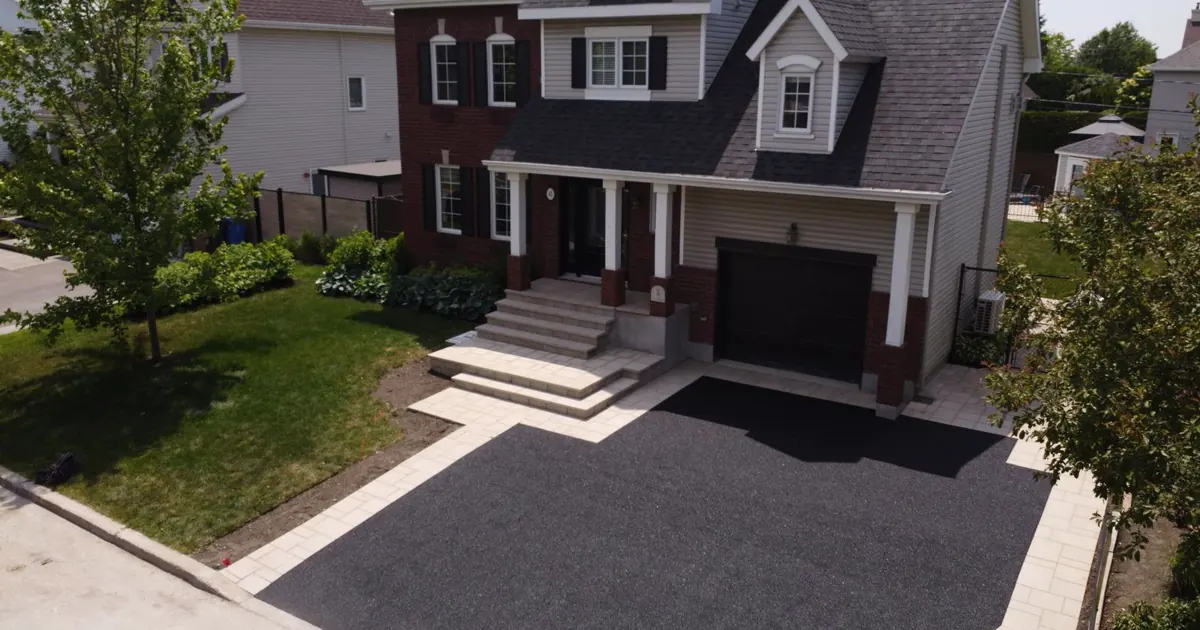
A rubber driveway must be designed for vehicle loads, tire movement, water and winter maintenance rather than treated as a decorative patio finish. The base, drainage, system design, installation quality and maintenance all shape how the completed surface performs.
Rubber surfacing may be considered over selected new or existing substrates, but it cannot turn a failed foundation into a stable structure. A site assessment first determines what can remain, what needs repair and what should be rebuilt before a finish is specified.
Start with a base assessment
Asphalt, concrete and granular bases respond differently under traffic. An assessment should document rutting, potholes, cracks, crumbling edges, previous patches and signs of seasonal movement, with special attention to the garage threshold, sidewalk and road connection.
A stable surface crack is not the same issue as settlement driven by water. If the cause remains active, its effects may continue through a new finish. The scope should identify structural repairs and surface preparation separately.
- Observe the driveway after rain and during spring thaw
- Mark areas where tires frequently turn or brake
- Check edges, the garage threshold and street transition
- Separate finish repairs from foundation corrections
Design drainage before choosing the finish
Water needs to leave the driveway without entering the garage or basement, crossing onto a neighbour’s property or collecting in a blocked ditch. Running and cross slopes, downspouts, drains and low points should be recorded before finished elevations are set.
Poor spring drainage can saturate the base and increase movement. A surface layer does not replace a maintained culvert, drain or free-draining foundation. Québec guidance for roadside properties likewise stresses keeping driveway drainage structures clear and functional.
- Move runoff away from foundations and openings
- Keep ditches and culverts flowing
- Coordinate grades with thresholds and curbs
- Correct closed low points before resurfacing
Account for vehicles and concentrated loads
A parked car, delivery truck, heavier electric vehicle or equipment on small wheels does not distribute weight in the same way. Tight steering while stopped can also stress a finish differently from straight-line traffic.
The design should address both everyday and occasional use. Jack stands, trailer legs, metal feet and sharp equipment produce concentrated loads that may need protection or a dedicated work area. These uses belong in the conversation before quoting.
- List the vehicles normally parked on the surface
- Identify occasional trucks, trailers and equipment
- Map turning and braking zones
- Protect the finish from concentrated loads where required
Plan snow clearing and de-icing
Before winter, discuss whether the property uses a snowblower, shovel, tractor or contracted plow. An aggressive metal edge or poorly adjusted blade can catch terminations and transitions on many surface types.
De-icers should be compatible with the installed system and used according to relevant instructions. Québec winter-maintenance guidance notes that effective de-icing begins with snow removal and that salt performance depends partly on surface temperature. No driveway finish should be sold as remaining ice-free without maintenance.
- Adjust equipment so it does not scrape exposed edges
- Remove snow before repeated traffic compacts it when practical
- Confirm de-icing products with the system provider
- Do not push snow into roads, shoulders or drainage ditches
Cost factors without a generic price claim
Two driveways with the same area can require very different work. Access, removal, repairs, grading, drains, layer thickness, colour, edging and the number of transitions all change labour and material requirements.
An uninspected square-foot price can leave out the most important part: the base. A useful quotation separates preparation, surfacing, optional repairs and drainage responsibilities and states the conditions required before installation.
- Existing substrate type and condition
- Drainage and grade corrections
- Access, handling and driveway geometry
- System build-up, colour and edge detailing
Seasonal inspection and maintenance
Inspect the driveway after its first winter and routinely thereafter, focusing on drains, edges and turning zones. Remove debris that holds water, and have small changes assessed before repeated traffic or another freeze-thaw season enlarges them.
Service life cannot be predicted from the material name alone. It varies with the foundation, exposure, loads, system, workmanship and care. Keeping product details and installer instructions makes future maintenance decisions easier.
- Clear drainage outlets and surface debris
- Watch terminations and steering zones
- Have lifting or movement assessed promptly
- Use maintenance methods approved for the installed system
Frequently asked questions
Can a rubber driveway be installed over old asphalt?
It may be possible when the asphalt remains sufficiently stable and can be prepared correctly. Deep rutting, settlement, active cracking or poor drainage may require repair or reconstruction first.
Can I use a snowblower on a rubber driveway?
Many configurations can be cleared with a properly adjusted snowblower, but equipment must not catch the surface, edges or transitions. Follow the guidance for the specific system and brief any snow-removal contractor.
Is rubber surfacing suitable for heavy vehicles?
That depends on the base, specified system, frequency, loads and turning patterns. Trucks, trailers, jack stands and other concentrated loads should be disclosed for a project-specific assessment.
How do I get a realistic driveway quote?
A site visit can measure the area, grades and repairs while assessing access, drainage, edges and the proposed system. Those facts support a specific scope without relying on an invented price range.