Pools
EPDM rubber pool deck planning: drainage, limits and upkeep
A practical look at what poured rubber can contribute around a pool, where its limits are and which details must be resolved first.
Équipe Aménagement Lalonde · · 9 min read
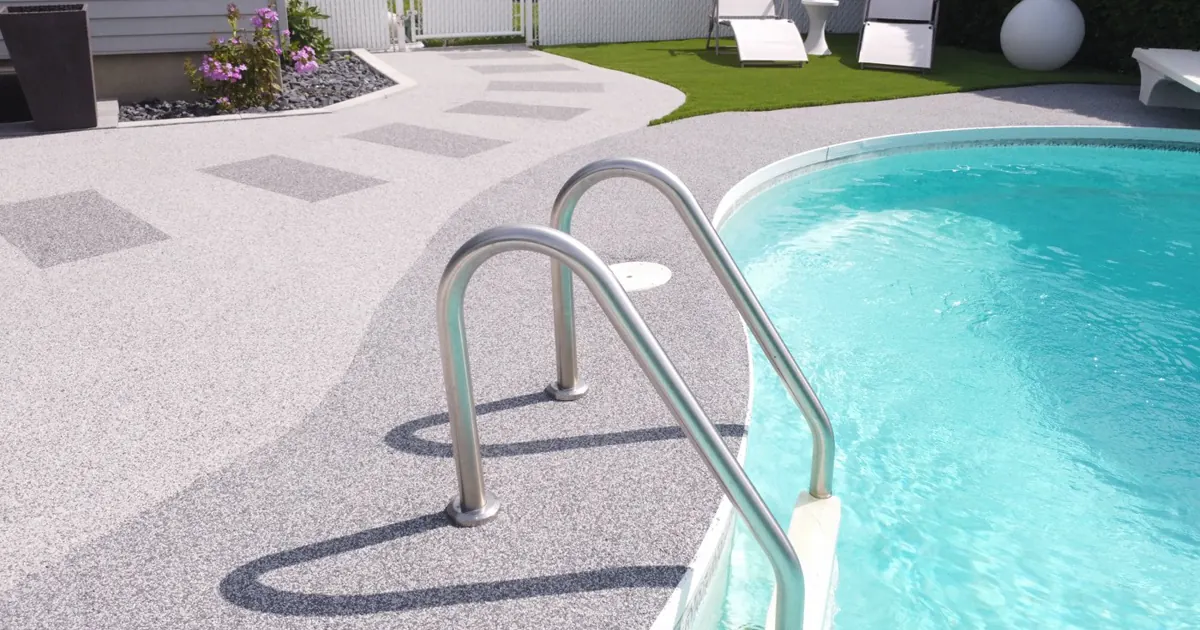
An EPDM rubber pool deck is a poured surface option that must be planned as part of the whole surround: base, coping, grades, drains, access and upkeep. Its continuous texture and colour choices may support comfort and design goals, but the outcome still depends on a stable substrate and deliberate water management.
Surfacing is not a pool safety device and never replaces a compliant enclosure, gate, supervision or other applicable measures. Quebec’s Residential Swimming Pool Safety Regulation and municipal requirements must be checked separately for each property.
The surface’s role in a pool environment
A poured EPDM system can create a continuous finish around curves, posts and selected details when it is designed for the site. Depending on the build-up, it may also feel different underfoot from a mineral surface.
Those characteristics do not manage access to the water or eliminate drowning risk. The Government of Quebec emphasizes restricted access, supervision and safe behaviour; the deck material is a separate design decision.
Traction and the limits of any wet surface
No pool deck should be described as slip-proof in every condition. Water, sunscreen, organic matter, algae, wear and cleaning residue can all alter traction, including on a textured outdoor finish.
Selection should consider texture, slope and the planned maintenance routine. Users still need to move carefully when the deck is wet, contaminated or cold.
- Ask for system data relevant to the intended use
- Plan regular removal of residue and organic matter
- Reject absolute slip-proof claims
- Keep circulation routes clear and adequately lit
Put grades and drainage ahead of appearance
Water should leave walking areas without pooling or being directed toward a vulnerable location. Existing grades, drains, coping, thresholds and the adjacent yard should be reviewed before finished elevations are set.
A permeable or seamless finish does not remove the need to design the water path. Actual permeability depends on the system and the layers below it; a blocked outlet or poorly draining base can still hold moisture.
Movement caused by water, frost or an inadequate base can be reflected in the finish. The cause should be corrected before surfacing is installed.
- Locate low points and water outlets
- Confirm elevations at coping and drains
- Keep runoff away from buildings and thresholds
- Investigate areas that move or retain water
Substrate, coping and pool-specific details
Concrete, asphalt or a purpose-built base must be assessed for stability, moisture and compatibility with the selected system. Cracks, joints, covers, anchors and equipment interfaces need individual detailing rather than one uniform layer placed over everything.
The connection to coping is highly visible and regularly exposed to water and traffic. It should avoid weak unsupported edges, retain maintenance access and respect joints or movement that cannot simply be bridged.
- Condition of coping and existing joints
- Access to skimmers, covers and equipment
- Transitions to patio, lawn or pavers
- Fence and gate components that must remain functional
Cleaning and in-season checks
Remove leaves, sand and debris before they collect in damp areas or around drains. Cleaning products, tools and pressure should follow the installed system’s instructions; aggressive methods or incompatible chemicals can affect the texture or binder.
Watch edges, drain areas, transitions and locations where water lingers. If lifting or separation appears, diagnose whether the source is the finish, adhesion, moisture or the substrate before selecting a repair.
- Rinse or clean according to product guidance
- Remove oils, lotions and organic matter promptly
- Keep drains and channels open
- Document changes with dated photographs
Coordinate surfacing with pool safety rules
Quebec’s regulation addresses access control and related installations. Changing a terrace, platform, elevation or circulation route may interact with a gate, enclosure or piece of equipment, and the municipality remains the proper resource for permits and local interpretation.
Plan the surface after identifying regulated elements that must remain or be changed. The quote should state the work limits and must not suggest that a deck finish alone makes a pool installation compliant or safe.
- Review the regulation and municipal guidance
- Maintain effective gates, fencing and access controls
- Preserve service clearances around equipment
- Separate surfacing work from compliance work in the scope
Frequently asked questions
Is an EPDM rubber pool deck slip-proof?
It can have a texture intended for outdoor use, but no surface is slip-proof in every condition. Water, lotions, debris, wear, slope and maintenance all affect traction.
Does rubber surfacing replace pool fencing requirements?
No. The surface does not control access to the pool. Enclosures, gates, supervision and all applicable rules must be addressed separately with the municipality and official requirements.
Can a cracked concrete pool deck simply be covered?
The crack type and cause should be assessed first. Some areas may be repairable, while unstable or poorly drained substrates can require more extensive work before surfacing.
What should be checked before selecting a colour?
Confirm the system, base, drainage, elevations and intended use first. Then review samples in site lighting and ask how colour, texture and maintenance are documented for the proposed product.