EPDM Guides
EPDM rubber surfacing guide for a well-planned outdoor project
A practical Canadian guide to EPDM layers, base preparation, drainage and the questions worth asking before installation.
Équipe Aménagement Lalonde · · 8 min read
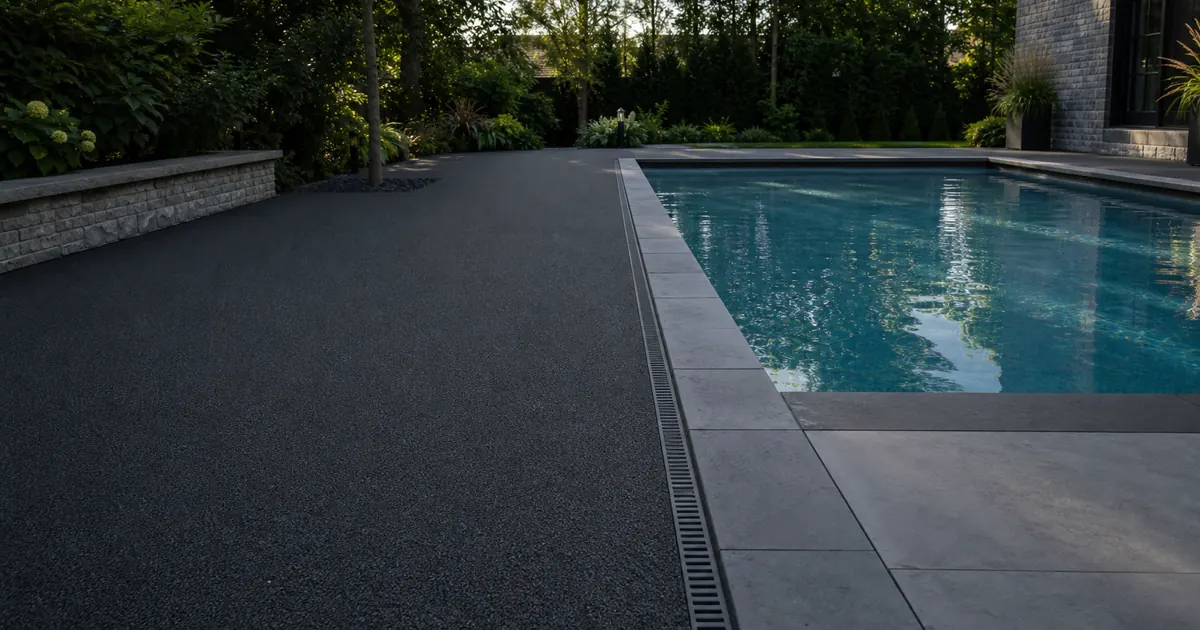
In outdoor surfacing, EPDM rubber surfacing generally refers to a poured-in-place rubber system whose exact composition should be checked in the proposed product documents. A sound evaluation looks beyond the visible finish to the specified build-up, substrate condition, edges and water management.
In Quebec, moisture and freeze-thaw conditions make site preparation especially important. A seamless-looking finish cannot stabilize a moving base or correct poor drainage, so the scope and material choices should follow an on-site assessment.
What an EPDM surfacing system actually includes
Technical documents for surfacing sold as EPDM may describe granules and a binder placed as a continuous layer. Depending on the product, use and specification, that layer may sit on a suitable base or form part of a multi-layer system; the selected system documents should confirm the composition.
Systems sold under the same general name can vary in granule size, binder formulation, thickness and preparation requirements. Product-specific technical documents are therefore more meaningful than a broad claim about EPDM as a category.
- Existing substrate or newly built base
- Base course, wearing course or complete assembly
- Binder selected for the granules and exposure
- Edges, joints, drains and transitions
EPDM, SBR and the rest of the assembly
Some system documents describe an exposed coloured finish sold as EPDM over a lower course that may contain SBR made with recovered rubber. That arrangement is neither automatic nor universal and should be confirmed in the written scope and product documents.
Granule type alone does not determine how a surface will perform. Material compatibility, binder ratio, installation conditions and the substrate are equally important. RECYC-QUÉBEC identifies synthetic play and sport surfaces as possible outlets for recovered tire rubber, but that does not amount to approval of every finished product.
Where poured rubber may fit
An EPDM system may be considered for pool surrounds, patios, walkways, driveways, play areas and some commercial spaces. The right build-up changes with foot or vehicle traffic, water exposure, furniture, point loads and the level of cushioning expected.
Transitions deserve just as much attention as the open field of the surface. Door thresholds, coping, steps, service covers and connections to concrete or pavers should all be detailed before installation begins.
- Describe everyday and seasonal use
- Map wet, shaded and high-traffic zones
- Identify furniture, equipment and concentrated loads
- Confirm transitions and finished elevations
Substrate and drainage set the real scope
A bonded finish responds to what happens below it. Cracked concrete, a shifting base, contamination or trapped moisture may require correction before rubber is placed. Covering a symptom without identifying the cause can leave the underlying issue unresolved.
Grades should move water to an appropriate outlet without creating low spots. Around pools and near buildings, drainage must be coordinated with coping, drains and the existing building envelope.
A site review determines whether the base can be cleaned and repaired or requires more substantial work. Photos are useful for early planning, but they do not always reveal movement, moisture or elevation changes.
How to compare installation proposals
A useful proposal explains the work, not only the total square footage. It should identify cleaning and repairs, work limits, edge details and conditions that could alter the scope once the existing surface is opened or prepared.
Ask for the applicable product data and maintenance instructions. Performance statements should relate to an identified system, test method and stated conditions—not an absolute promise applied to every site.
- Preparation and repairs included or excluded
- Proposed system build-up and thickness
- Treatment of edges, joints, drains and obstacles
- Weather requirements and return-to-service timing
- System-specific maintenance guidance
Maintenance after installation
Routine cleaning helps prevent sand, organic matter and residue from building up and holding moisture. Cleaning products, pressure and tools should follow the instructions for the binder and finish that were installed.
Check edges, transitions, drains and heavily used areas periodically. If lifting, separation or a soft area appears, investigate the cause before attempting a cosmetic patch so that water or base movement is not trapped below the repair.
- Keep drains and outlets clear
- Remove debris and contaminants promptly
- Avoid sharp tools and unapproved chemicals
- Have lifting, openings or soft spots assessed
Frequently asked questions
Is EPDM rubber surfacing always a two-layer system?
No. Some systems pair an SBR base with an EPDM wearing course, while other assemblies are available. The proposal and technical data should identify the layers being supplied.
Can EPDM be installed over existing concrete?
It may be possible after the concrete is assessed for cracking, moisture, slope, contamination and stability. Required preparation or repairs depend on the actual condition.
Is an EPDM surface slip-proof?
No outdoor surface should be described as slip-proof in every condition. Texture, water, contaminants, wear, slope and maintenance all influence traction, and care is required when any surface is wet or icy.
What should I provide before a site visit?
Share approximate dimensions, intended use, drainage concerns, visible cracks, access constraints and obstacles. Photos help with initial planning but do not replace substrate inspection.